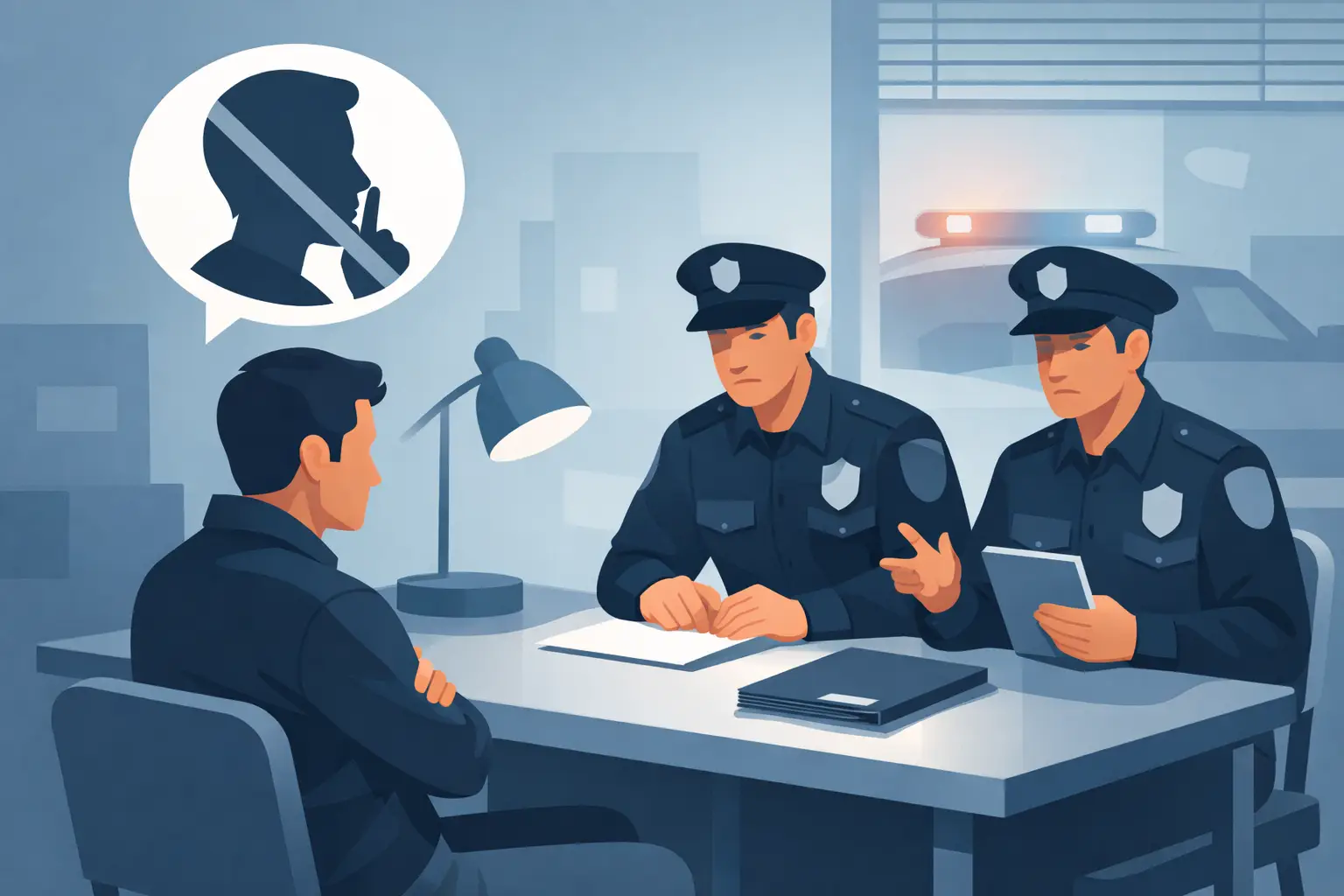
A police officer says, “We just need to clear a few things up.” That may sound casual. It is not casual if your words can be used to build a case against you. Knowing how to handle police questioning can protect your freedom, your family, and your future.
The rule is simple: be calm, be respectful, and do not try to talk your way out of trouble. Tell the officer you want a lawyer. Then stop answering questions.
Police Are Looking for Information, Not Your Version of the Story
Police questioning is not a conversation between equals. Officers are trained to gather statements, test reactions, identify inconsistencies, and obtain admissions. They may be polite. They may say they believe you. They may tell you that a lawyer will make things worse or that they only need your side.
Do not take the bait.
Even an innocent person can make a damaging statement under pressure. You may guess at a time, get a detail wrong, try to protect someone, or say something that sounds different once it is repeated in court. A small mistake can become the centerpiece of an interview report, a warrant application, or a prosecutor’s theory.
You do not have to be guilty to need counsel. You need counsel because the stakes are real.
The Words to Use When Police Question You
You do not need a speech. In fact, less is better. Clearly say: “I am invoking my right to remain silent. I want to speak with a lawyer.”
Then stop talking about the facts. Do not explain. Do not defend yourself. Do not answer “just one quick question.” Do not try to sound cooperative by filling silence.
Your request should be direct. Statements such as “Maybe I should get a lawyer” or “Do you think I need an attorney?” can create arguments about whether you actually invoked your rights. Make it plain: “I want a lawyer. I am not answering questions.”
After that, remain calm. You can ask whether you are free to leave. If the answer is yes, leave peacefully. If the answer is no, do not resist, argue, or physically interfere. Repeat that you want counsel and remain silent.
Miranda Rights Matter, But Do Not Wait for Them
Many people believe police cannot use anything they say unless an officer reads Miranda warnings first. That is not how it works.
Miranda warnings generally apply when a person is both in custody and being interrogated. Police can often ask questions before an arrest, during a voluntary encounter, or in situations where they claim you were free to leave. Your statements may still be used against you.
That is why waiting for an officer to say, “You have the right to remain silent,” is a bad plan. You have that right whether the warning has been read or not. Use it.
A detective may say, “You are not under arrest, so you do not need a lawyer.” That does not mean talking is safe. If an investigation has focused on you, the interview may be an attempt to lock you into a statement before you understand the allegations or evidence.
What to Do During a Traffic Stop
A traffic stop is one of the most common places people talk themselves into a charge. You should provide the documents a driver is legally required to provide, such as your license and proof of insurance. Keep your hands visible, move slowly, and do not make sudden motions.
But a traffic stop does not require you to answer questions about where you have been, where you are going, what is in your car, whether you have been drinking, or who you have been with. You can politely say, “I do not want to answer questions.”
If an officer asks to search your vehicle, you can say, “I do not consent to any searches.” Say it calmly and do not interfere if officers search anyway. Consent and compliance are different. You should not physically stop a search, but you do not have to give permission for one.
The same is true with your phone. Do not hand over your passcode, unlock the device voluntarily, or consent to a search of its contents without legal advice. Phones contain conversations, photos, location data, financial information, and private details that can expand an investigation far beyond the original stop.
Do Not Lie to Police
Remaining silent is lawful. Lying to police can create a new problem.
Do not invent an alibi, name someone else, delete messages, coordinate stories, hide evidence, or make false statements because you are scared. Those choices can expose you to additional criminal allegations and make a defense harder.
There is a difference between refusing to answer and giving false information. The first protects your rights. The second can put you in a deeper hole.
If officers ask for basic identifying information, do not turn a roadside encounter into a fight over every detail. Stay measured. Provide legally required documents when appropriate, but do not volunteer facts about the investigation. When in doubt, say you want a lawyer before answering further questions.
If Police Come to Your Home or Job
A badge at the door can make people panic. Do not.
Ask whether officers have a warrant. If they do, do not obstruct them. You can state that you do not consent to any search beyond the warrant, but do not physically interfere. Do not invite officers inside just because they say they want to talk. Speak through the door if you choose to speak at all.
If they ask you to come to the station to “clear things up,” understand what that request may mean. You are not required to volunteer for an interview simply because police ask. A stationhouse interview can become an interrogation quickly, and a person who arrives voluntarily may still leave in handcuffs.
At work, do not try to protect your reputation by explaining everything in front of coworkers or a supervisor. Keep it short: “I need to speak with my lawyer.” Your reputation is better protected by a disciplined response than by a public panic.
Do Not Let Silence Turn Into Small Talk
Once you invoke your right to counsel, do not restart the conversation yourself. Officers may continue casual conversation while transporting you, booking you, or waiting in an interview room. They may ask about your family, your job, sports, or something unrelated to the case.
Assume anything you say could be documented.
The most damaging statements are often not formal confessions. They are offhand remarks: “I was only there for a minute.” “I did not know he had a gun.” “I had a couple drinks, but I was fine.” Those words may place you at a scene, show knowledge, or create an inconsistency that did not exist before.
You do not need to be rude. You need to be disciplined.
What Family Members Should Do
If a loved one is being questioned or arrested, do not call the investigator to explain the situation. Do not send texts to witnesses, post about the case online, or try to gather statements by pressuring people. Good intentions can look like witness tampering, obstruction, or coordination.
Write down what you know privately: dates, names, locations, potential witnesses, and any police contact. Preserve messages, videos, and documents. Do not alter or delete anything. Then get legal guidance before taking further action.
A criminal defense lawyer can assess whether police have a warrant, whether an arrest may be coming, whether a search was lawful, and whether there is a way to address the matter without walking blindly into an interview.
When You Need a Lawyer Immediately
Call counsel as soon as police identify you as a suspect, ask you to come in for questioning, search your property, seize your phone, arrest you, or contact you about a serious investigation. This is especially urgent in cases involving drugs, guns, DUI, violence, allegations of conspiracy, or RICO. In those cases, one statement can affect not only you but other people tied to the investigation.
At Weinstein Criminal Defense, the approach is direct: get the facts, protect your rights, and prepare for the fight ahead. There are no magic words that erase a case. But there are smart choices that prevent the government from handing itself evidence.
When police want answers, do not give them a performance. Give them one clear sentence: “I want a lawyer.” Then let your lawyer do the talking.
Leave a Reply