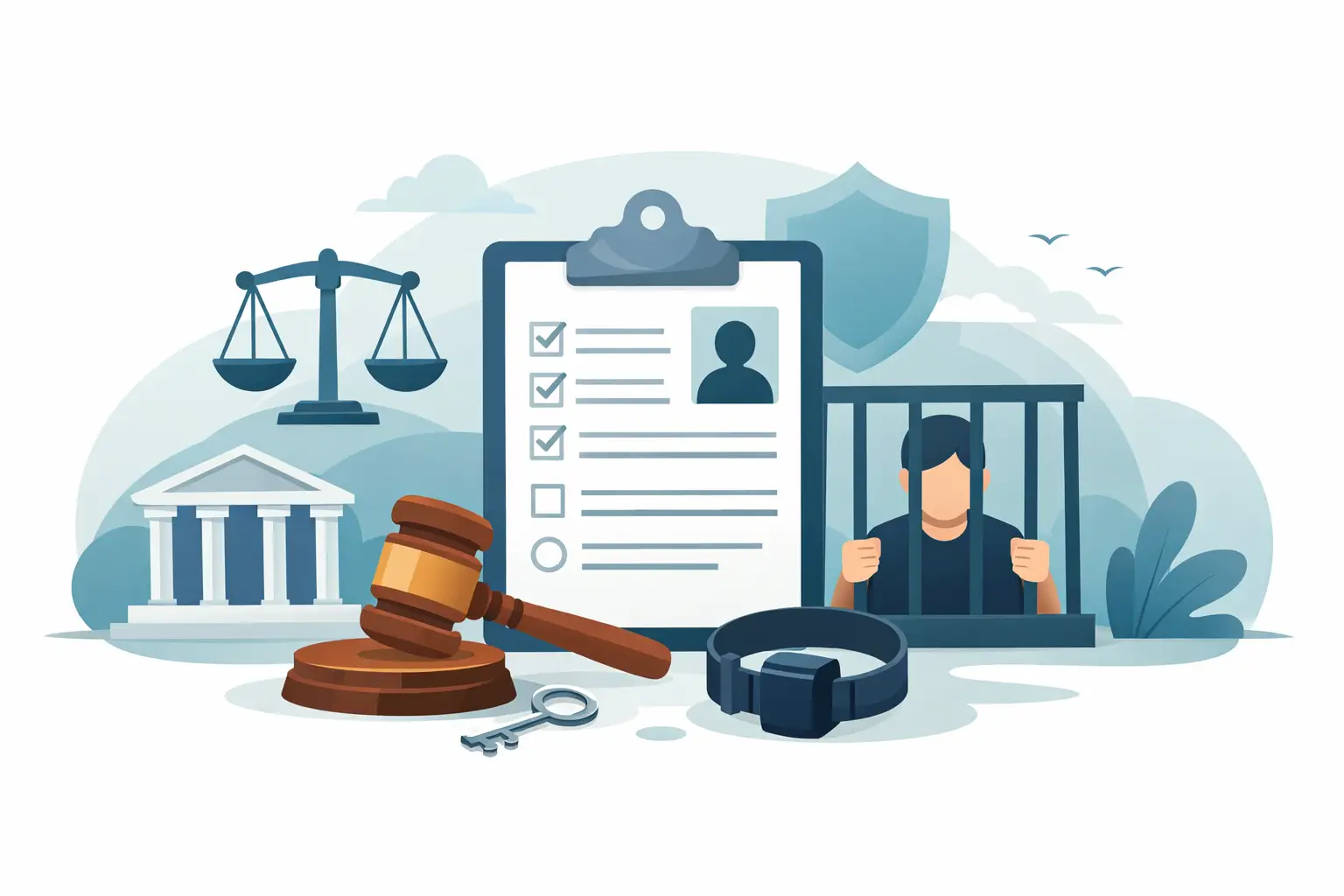
The first 24 to 72 hours after an arrest can feel like chaos. You are trying to get out, protect your job, keep your family calm, and figure out what the court expects from you. This guide to pretrial release conditions is built for that moment – plain English, no fluff, and no false comfort.
Getting released before trial is not the same as being free from the case. It means the court is allowing you to remain out of custody while your charges are pending, but only under rules the judge believes will protect public safety and make sure you return to court. If you break those rules, the court can tighten your bond, revoke your release, or send you back to jail.
What pretrial release conditions really mean
Pretrial release conditions are court-ordered restrictions or requirements you must follow while your criminal case is pending. In Georgia, those conditions can come from a judge at a bond hearing or be built into the terms of your release another way, depending on the charge and the court.
Some conditions are basic. Show up to court. Do not pick up new charges. Keep the court informed about your address. Others can seriously affect daily life, including where you can go, who you can speak to, whether you can drink alcohol, and whether you must submit to random testing or electronic monitoring.
That is why people get in trouble after release even when they think they are doing fine. They treat bond conditions like a suggestion. They are not suggestions. They are orders.
A guide to pretrial release conditions in Georgia
The exact conditions depend on the charge, the facts alleged by the state, your criminal history, the alleged victim, and how much risk the court thinks you pose. A person charged with DUI may face alcohol restrictions or testing. A person accused of family violence may face strict no-contact rules. A person charged in a drug or gun case may be ordered to avoid certain places, people, or substances.
In serious felony cases, the court may impose tighter conditions because the stakes are higher. Judges often look at whether they believe you are a flight risk, whether they think anyone could be in danger, and whether there is concern about witness intimidation, evidence tampering, or repeat conduct.
Common pretrial release conditions
One of the most common conditions is simply appearing at every court date. Miss one date, and the court can issue a bench warrant. Even if the absence was not intentional, the damage can be immediate.
Another common condition is avoiding new arrests. That sounds obvious, but it reaches farther than people think. If you are arrested again while out on bond, even for a misdemeanor, the prosecutor may argue you cannot follow rules and should not stay out.
No-contact orders are also common. In family violence, stalking, sex offense, and witness-related cases, the judge may bar direct or indirect contact with a specific person. That usually means no calls, no texts, no social media messages, no passing messages through friends, and no “accidental” contact that could have been avoided.
Travel restrictions may limit you to Georgia, your county, or a specific address. Some people are required to surrender passports. Others must get permission before leaving the state for work or family reasons.
Drug and alcohol restrictions show up often, especially in DUI and drug cases. The court may order random screens, treatment, counseling, or complete abstinence. If drinking is prohibited, saying you only had “a little” will not help.
Electronic monitoring, curfews, and reporting requirements are also common in higher-risk cases. You may have to check in with a pretrial officer, stay home during certain hours, or wear an ankle monitor. These conditions can be expensive, inconvenient, and strict. They can also be the difference between being home and sitting in jail.
The fine print can hurt you
Most bond violations do not happen because someone planned to rebel against the court. They happen because people do not understand how strict these conditions are.
Take a no-contact order. If the protected person reaches out to you first, that does not automatically make contact legal. If the court ordered you not to respond, then do not respond. If you live together, share children, or have business ties, the situation gets more complicated fast. Do not guess.
The same goes for social media. Posting about the case, about an alleged victim, or about witnesses can create problems even if you never tag anyone. Courts and prosecutors pay attention to that behavior, especially in emotionally charged cases.
Testing conditions also create traps. Missing a drug screen can be treated like a failed screen. Showing up late may count as noncompliance. Taking medication without clearing it the right way can create a mess you did not see coming.
What happens if you violate release conditions
A violation can trigger a warning, a motion to revoke bond, a new arrest, or a full hearing where the court decides whether you stay out. The result depends on the type of violation, the judge, the charge, and your overall history in the case.
Some violations look minor on paper but land badly in court. Sending one text to a protected person may be enough. Failing to charge an ankle monitor may be enough. Missing one check-in may be enough. In a serious felony case, judges are often not in the mood to give repeated chances.
There is also the real-world damage. Once the prosecutor can argue you ignored court orders, it becomes harder to frame you as responsible and reliable. That can affect later bond arguments and can shape how the court views everything else in your case.
How judges decide which conditions to impose
Judges are supposed to balance competing concerns. They want to protect the public, protect alleged victims and witnesses, and make sure the accused returns to court. At the same time, release conditions should not be more restrictive than necessary.
That is the legal idea. The reality is messier. Some courts are cautious by nature. Some cases bring political pressure. Some allegations trigger emotional reactions before the evidence is tested. That is one reason a strong defense presentation at the bond stage matters.
The judge may consider your ties to the community, work history, family support, prior convictions, prior failures to appear, the seriousness of the allegations, and whether there is evidence of threats or violence. If you have a stable residence, steady employment, and people willing to stand up for you, that can help. If the state claims you are dangerous or likely to run, the defense needs to answer that head-on.
How to protect yourself while out on bond
Read every release document closely. Do not rely on memory, jail talk, or what a friend thinks the judge meant. If a condition is unclear, get clarity from your lawyer immediately.
Take every court date and every reporting obligation seriously. Put them in your phone, on a calendar, and anywhere else you will actually look. If transportation, childcare, or work conflicts could interfere, deal with that early, not the night before.
Stay away from people and places tied to the allegations, even if the written order does not spell out every detail. If your case involves drugs, guns, alleged gang activity, or family conflict, bad optics can become real legal problems fast.
Do not try to explain things directly to the judge, the prosecutor, the alleged victim, or law enforcement. That usually makes the problem worse. Let your lawyer handle communication and strategy.
Why legal advice matters early
Pretrial release conditions are not just paperwork. They shape how you live while the case is pending, and they can affect the defense itself. In some cases, conditions are too broad, unrealistic, or unnecessary. They can sometimes be challenged or modified, but that takes a focused legal approach.
An experienced defense lawyer can push for workable terms, explain the risks you may not see, and step in quickly if the state claims you violated a condition. That matters even more in felony cases, violent crime allegations, RICO matters, gun cases, and any case involving a claimed victim or witness pressure.
At Weinstein Criminal Defense, the view is simple: if your freedom is on the line, you do not need a sugarcoated answer. You need the straight truth, a hard defense, and a clear plan for staying out and fighting the case the right way.
If you are out on bond now, treat every condition like it matters because it does. One careless move can put you back in jail. One smart move – getting clear advice before you act – can keep your defense on solid ground.
Leave a Reply