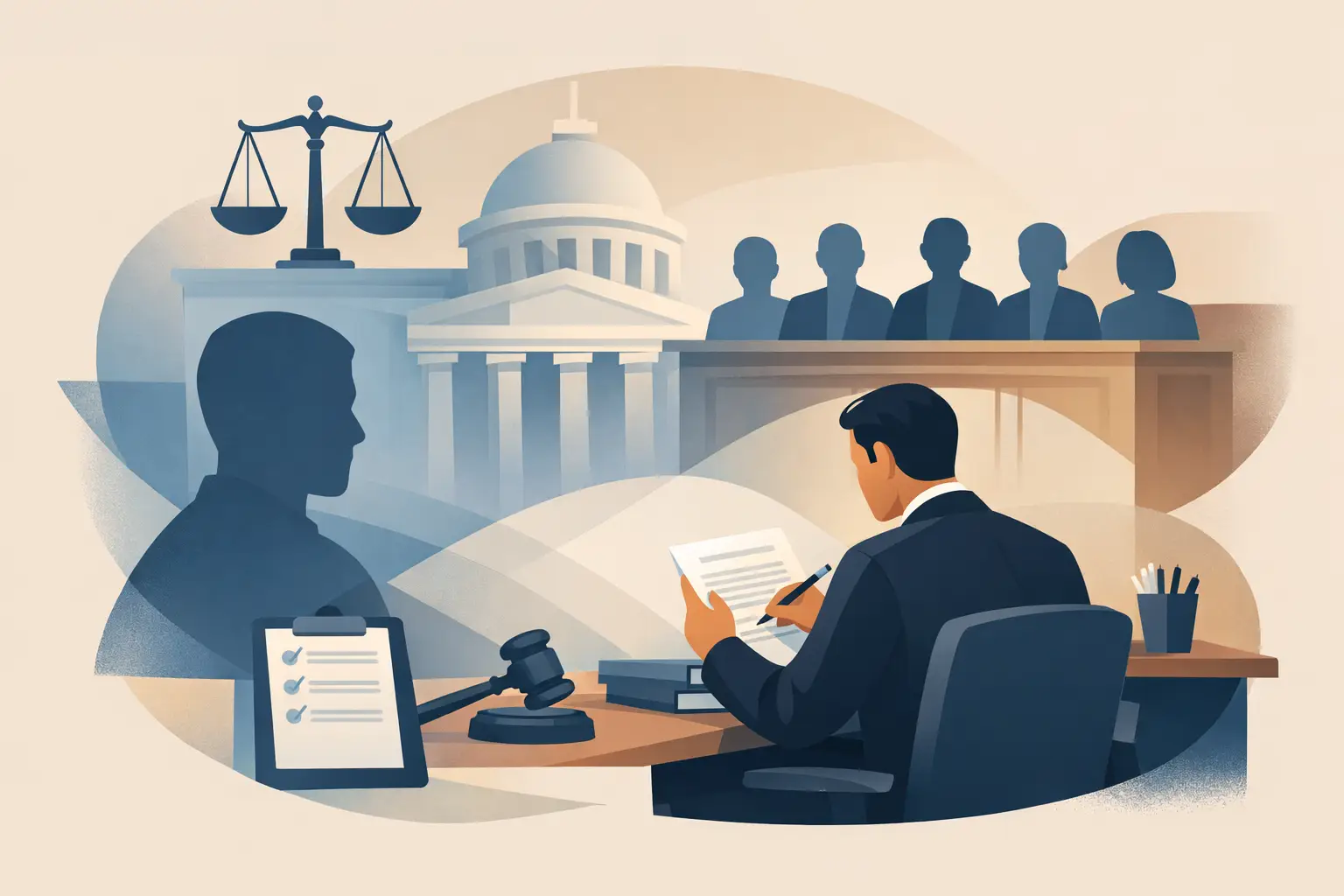
If you just got word that you may have to testify, this is not the time to guess your way through it. Figuring out how to prepare for grand jury proceedings can affect your freedom, your exposure, and what happens next in the case. A grand jury room is not a casual conversation. It is a controlled legal setting, and what you say there can follow you for a long time.
A lot of people make the same dangerous mistake. They assume that if they are not the target, they do not need to worry. That is flat wrong. Witnesses can become targets. Innocent people can make statements that create problems. Even a truthful answer can be twisted if you walk in unprepared.
What a grand jury is really about
A grand jury does not decide guilt or innocence. It decides whether the government has enough evidence to move forward with charges. That matters because prosecutors control much of what the grand jury sees and hears. The setting is one-sided by design.
In many cases, the prosecutor presents witnesses, documents, or other evidence and asks the grand jury to decide whether probable cause exists. The person under investigation and defense counsel generally are not in the room challenging the evidence the way they would at trial. That is why preparation matters so much. You are entering a process that is not built to protect you unless you take steps to protect yourself.
How to prepare for grand jury testimony without making it worse
The first move is simple and non-negotiable. Talk to a criminal defense lawyer before you testify. Not after. Before.
That is true whether you received a subpoena, a call from an investigator, or a request to “just come in and clear things up.” People talk themselves into trouble every day because they think cooperation alone will save them. Sometimes cooperation helps. Sometimes it hands the government a cleaner case. It depends on your role, the facts, and what prosecutors think they already know.
A defense lawyer can figure out whether you are a witness, subject, or target. Those labels matter. A witness may have relevant information. A subject is someone whose conduct falls within the scope of the investigation. A target is a person the prosecutor believes may have committed a crime. You may not be told clearly where you stand unless your lawyer pushes for answers.
Get clear on your exposure
Before you say a word, your lawyer should help assess your risk. Were you present during the alleged conduct? Did you send texts, emails, or financial records that could be pulled into the investigation? Did you say something earlier to police, coworkers, family members, or on social media that may come back around?
This is not the moment for half-truths with your own lawyer. Tell the full story, including the ugly parts. Good defense strategy starts with the truth. Surprises are poison in criminal cases.
Review the facts carefully, not creatively
Preparation is not coaching you to invent a version that sounds better. It is about getting grounded in what is true. That means reviewing dates, communications, documents, timelines, and prior statements so you do not guess under pressure.
If you do not remember something, the right answer may be “I don’t remember.” That is very different from guessing. Guessing creates contradictions. Contradictions create credibility attacks. And if prosecutors think a false statement was intentional, the problem can get much bigger than the original investigation.
Know your rights before you walk in
One of the most important parts of how to prepare for grand jury appearances is understanding that the room is not neutral territory. In many jurisdictions, your lawyer may not be allowed to sit next to you inside the grand jury room while you testify. That does not mean you go in alone strategically. It means your preparation outside the room is critical.
You may still have the right to step outside and consult your lawyer before answering certain questions. Whether and how that works depends on the court, the jurisdiction, and the specific circumstances. You need to know the rules before the questioning starts, not while you are rattled.
There is also the Fifth Amendment. If truthful answers could incriminate you, asserting the right to remain silent may be necessary. But this is not something to wing on instinct. Invoking the Fifth can protect you, but it also carries consequences depending on the context, including how prosecutors react and whether they seek immunity. Strategy matters.
Immunity is not simple
Some people think immunity means total safety. It does not. There are different kinds of immunity, and the exact terms matter. In some situations, your testimony cannot be used directly against you, but that does not always shut down every possible prosecution.
If immunity is being discussed, your lawyer needs to examine it closely. Never rely on vague assurances or hallway talk. If the government wants your testimony badly enough to offer protection, you need to know exactly what that protection covers and what it does not.
What to expect in the grand jury room
Expect a formal process, but not a friendly one. The prosecutor asks questions. Grand jurors may ask questions too. There is pressure, even when nobody raises their voice.
You may be asked about people, places, transactions, messages, meetings, or events that seem minor on their face. Do not assume a question is harmless because it sounds routine. Prosecutors often build cases brick by brick. A small detail can fill a gap in a timeline or tie one witness to another piece of evidence.
That is why disciplined answers matter. Listen carefully. Answer only the question asked. Do not volunteer extra information to seem helpful. Do not try to outsmart the room. And do not let silence make you nervous. Silence is not your enemy. Loose talk is.
Mistakes that can hurt you fast
The biggest mistake is showing up unprepared and trying to “be honest” without legal guidance. Honesty matters, but honesty without strategy can still get you burned.
Another common mistake is talking to other witnesses about testimony. That can create consistency problems, witness tampering accusations, or both. Keep your circle tight.
People also hurt themselves by cleaning up phones, deleting messages, or trying to fix records before testimony. That is a terrible idea. Destruction or alteration of evidence can become a separate crime. If there is damaging material, your lawyer needs to know about it. The answer is strategy, not panic.
Finally, do not confuse confidence with control. You may think you can explain everything once you get in there. Maybe you can. Maybe the prosecutor is waiting for one sentence that locks you into a version they can test against texts, surveillance, bank records, or another witness. Overconfidence is expensive.
How your lawyer helps you prepare for grand jury risk
A serious defense lawyer does more than tell you to tell the truth. The job is to pressure-test your position before the government does.
That includes reviewing subpoena language, identifying your legal exposure, deciding whether to push back on testimony, preparing you for likely areas of questioning, and working through the answers that are truthful, accurate, and disciplined. It may also involve communicating with prosecutors ahead of time, exploring immunity, or challenging whether certain information should be produced at all.
In a high-stakes case, preparation can also mean investigating the broader context. Who else is involved? What is the theory of the case? What evidence likely exists already? Where are the pressure points? The better your lawyer understands the battlefield, the better you are positioned when questioning starts.
For people in Georgia facing serious criminal exposure, this is where trial-tested counsel matters. A firm like Weinstein Criminal Defense approaches these situations the right way – directly, aggressively, and without sugarcoating the risk.
If you are only a witness, should you still worry?
Yes. Not panic. Worry enough to be smart.
Some witnesses truly are just witnesses. Others are one bad answer away from becoming much more interesting to prosecutors. Sometimes the risk is criminal. Sometimes it is perjury. Sometimes it is obstruction. Sometimes it is simply getting boxed into testimony that damages you later in a related case, a job issue, or a civil dispute.
This is why broad advice online can be dangerous. The right move depends on what you know, what you did, what the government has, and whether your interests line up with anybody else’s. There is no one-size-fits-all answer.
The right mindset going in
Treat the situation with respect, not fear. Fear makes people ramble, guess, agree too quickly, or try to please the prosecutor. Respect means understanding the stakes and preparing like they are real, because they are.
If you are trying to figure out how to prepare for grand jury testimony, keep it simple. Get a defense lawyer. Tell your lawyer the truth. Learn your risks before you open your mouth. Then walk in with a plan instead of hope.
When the government asks questions, this is not the time to improvise. It is the time to be protected, prepared, and steady.
Leave a Reply