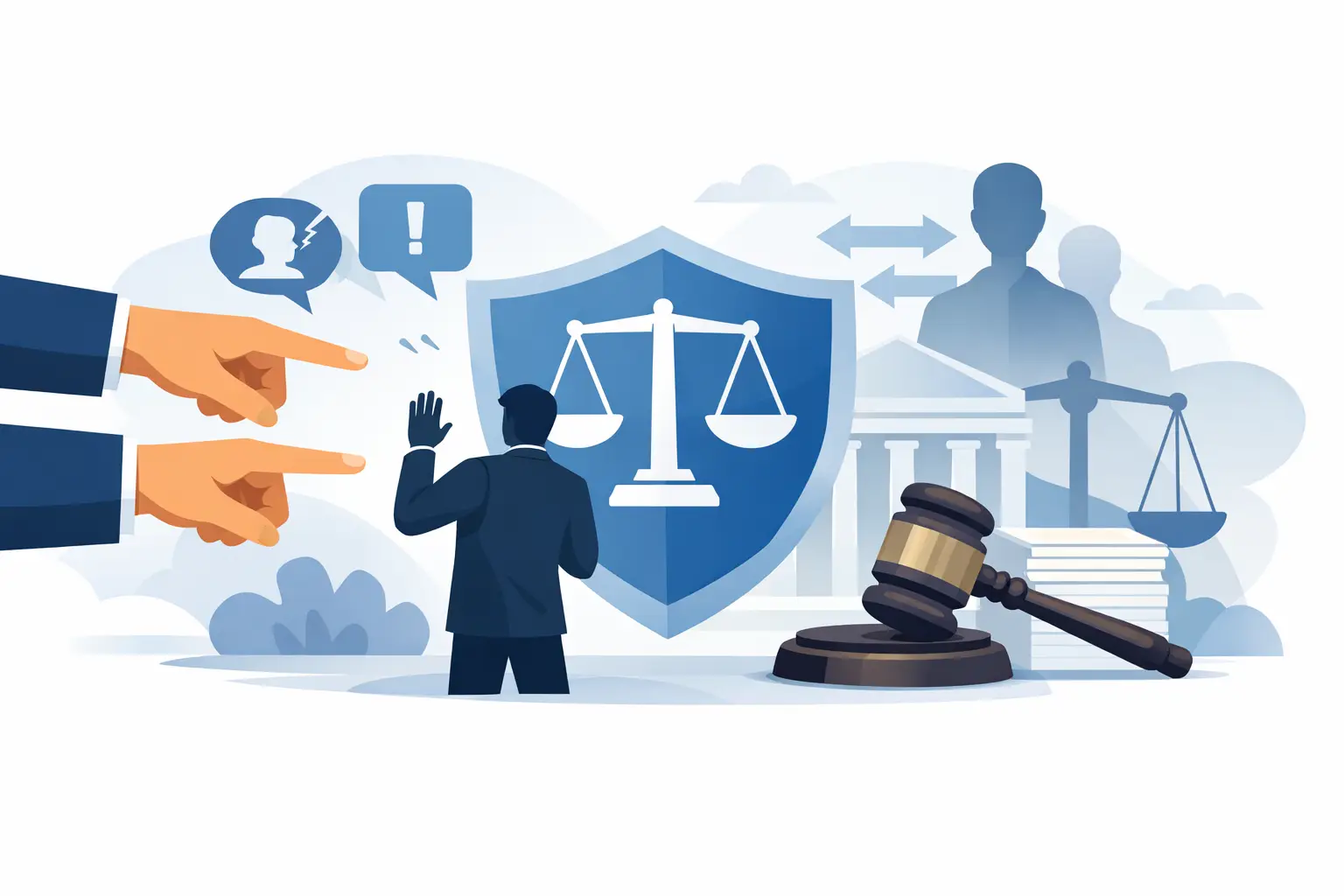
One accusation can wreck a job, a marriage, a reputation, and your peace of mind before a jury ever hears a word. If you are looking for the best defense for false accusations, start here: do not assume the truth will protect you by itself. It will not. Truth matters, but in a criminal case, truth has to be proven, protected, and presented with force.
People often make a dangerous mistake when they are falsely accused. They think, I did nothing wrong, so this will clear up fast. That is how good people talk themselves into bad statements, sloppy texts, consent searches, and interviews that hand the state pieces it did not have before. A false accusation is not just a lie. It becomes a legal threat the second police, prosecutors, employers, or investigators start building a narrative around it.
What is the best defense for false accusations?
The best defense for false accusations is a fast, disciplined defense built on evidence, silence where it counts, and a lawyer who treats the accusation like a real threat from day one.
That answer may sound simple, but the details matter. There is no magic phrase that makes police back off. There is no clean shortcut where you explain everything and they say sorry for the inconvenience. Some cases do get dropped quickly. Many do not. A false allegation can grow teeth because of fear, bias, bad assumptions, digital misunderstandings, or a witness who sounds believable but is dead wrong.
A real defense starts by controlling damage early. That means protecting your words, gathering favorable evidence before it disappears, identifying motive and inconsistency, and forcing the prosecution to prove every part of the story. If the accusation is false, the job is not merely to deny it. The job is to expose why it fails.
Why false accusations gain traction
People want criminal cases to be clean and obvious. Real life is not. A breakup turns ugly. A business dispute spills into threats. A family member wants leverage in a custody fight. A traffic stop becomes a resisting charge after emotions rise. A witness guesses instead of knowing. A complaining witness may lie outright, but plenty of accusations come from exaggeration, confusion, intoxication, fear, or pressure from someone else.
That is why these cases can be dangerous. The state does not need a perfect story to charge you. It needs enough to start. Once that happens, the system keeps moving unless someone stops it with facts, strategy, and pressure.
Jurors also bring life experience into the courtroom. Some assume an accusation would not exist unless something happened. Others believe confidence equals truth. A strong defense has to account for that. It is not enough to be innocent. You need a case that makes innocence visible.
The first 48 hours matter most
If you are under investigation or already charged, the early moves can shape the entire case. The biggest priority is to stop making the problem worse.
Do not give a statement because you think honesty alone will save you. Honest people get trapped by wording, memory gaps, and leading questions every day. Investigators are trained to test, press, and pin you down. If facts are twisted later, you do not get to rewind the interview.
Do not contact the accuser to straighten things out. That can be spun as intimidation, harassment, witness tampering, or consciousness of guilt. Even a calm text can look ugly once it is pulled out of context.
Do not delete messages, location history, photos, or social media content. Deleting material can create a new problem and make neutral facts look suspicious. Preserve everything. Screenshots help, but full records are better.
Do not talk about the case with friends, coworkers, or online. Loose talk becomes evidence. Private messages are rarely as private as people think.
This is where a serious defense lawyer earns value immediately. The right lawyer can shut down risky communication, start collecting records, deal with law enforcement, and build the framework of a defense before the state gets too comfortable with its version of events.
Evidence beats outrage
Being falsely accused is infuriating. But anger is not a defense. Evidence is.
The strongest false-accusation cases are usually built from hard facts: phone records, surveillance video, access logs, timestamps, rideshare data, card transactions, GPS records, social media metadata, medical records, employment records, and witness statements gathered before memories shift. Sometimes the best evidence is digital. Sometimes it is old-fashioned legwork.
An alibi can be powerful, but only if it is real and supported. Character witnesses can help in some settings, but they rarely carry a criminal case on their own. By contrast, one timestamped video or one text thread showing motive to fabricate can change the entire fight.
This is also where trade-offs come in. Not every piece of favorable evidence should be handed over early. In some cases, showing the prosecution your strongest cards can end the matter sooner. In other cases, it just helps them repair their weak spots. Strategy matters. Timing matters. The best defense is not just having facts. It is knowing when and how to use them.
How a defense lawyer attacks a false accusation
A good defense does more than say my client did not do it. It tests every part of the accusation until weak points start showing.
Credibility
Does the accuser’s story stay the same across texts, interviews, reports, and testimony? Small differences happen in real life. Big changes matter. So do omissions. So does timing.
Motive
False accusations often have fuel behind them. Revenge, jealousy, leverage, fear of getting caught, custody pressure, immigration concerns, workplace politics, or money disputes can all shape a story. Motive alone does not prove a lie, but it can explain one.
Physical evidence
Does the evidence match the story, or does it contradict it? Prosecutors often talk confidently before they have stitched the facts together. A close review can expose serious gaps.
Procedure
Police make mistakes. They cut corners, misread scenes, pressure witnesses, and write reports that sound cleaner than reality. Illegal searches, suggestive identification procedures, and sloppy evidence handling can weaken or destroy a case.
Reasonable doubt
Sometimes the defense proves the accusation is false. Other times, the defense shows the state cannot prove it is true. Both outcomes matter. The burden is on the prosecution, not on you to prove a negative beyond all doubt.
The best defense for false accusations depends on the charge
Not all false allegations are built the same, and the best defense for false accusations will depend on what you are accused of and where the proof is likely to be found.
A false domestic violence accusation often turns on 911 audio, body camera footage, visible injuries, prior text messages, and the relationship history between the parties. A false sexual assault allegation may involve consent communications, timing gaps, forensic issues, digital records, and post-event conduct. A false theft or fraud accusation may rise or fall on business records, account access, authorization, and who had control of the money or property.
Gun, drug, and gang-related accusations bring another layer. In Georgia cases involving serious felonies or RICO allegations, prosecutors may try to turn association into guilt. That is dangerous. Being near people under suspicion is not the same thing as joining their crime. Those cases require disciplined factual separation and aggressive pressure on the state’s assumptions.
Different charge, different battlefield. Same basic truth: if you wait too long, evidence hardens against you.
What innocent people get wrong
Innocent people often think cooperation means talking freely. It does not. Cooperation can mean showing up through counsel, preserving evidence, following court orders, and making smart strategic decisions. It does not mean volunteering to be interrogated.
They also underestimate how much appearances matter. A missed court date, an emotional outburst, or one ugly social post can poison a case that should have been defensible. Judges and juries are human. So are police. You do not have to be perfect, but you do have to be careful.
And many people hire the wrong lawyer. False-accusation cases are not paperwork cases. They are credibility wars. You need someone ready to push, investigate, cross-examine, and try the case if necessary. Weinstein Criminal Defense stakes its reputation on that kind of fight.
What to do right now
If you are facing a false accusation, treat it like the emergency it is. Save everything. Say little. Follow every bond condition and court order. Stay off social media. Make a timeline while events are fresh. Write down names, dates, locations, and possible evidence sources. Then get a defense lawyer involved before the state’s version of the story becomes the default version.
A false accusation can make you feel powerless. You are not. But this is the part where discipline beats emotion. The truth still needs a fighter. Get one, protect yourself, and make the other side prove what they claim.
Leave a Reply